Case Studies
Work that made
a real difference.
Deep dives into projects where digital strategy, design thinking, and leadership converged to create meaningful outcomes. I'm always working on new ones, so stay tuned for more!
E-Commerce Platform Migration & Redesign
Redesigning Community Natural Foods e-commerce through research, strategy, and cross-functional leadership.
Project Overview
- Company
- Community Natural Foods — Calgary, Alberta
- My role
- Lead Digital Manager & UX
- Scope
- Platform migration, UX redesign, research programme, GTM coordination
- Tools
- Figma, Adobe XD, Hotjar, Google Analytics, PowerBI
- Timeline
- Multi-phase. Research through post-launch optimisation
The Challenge
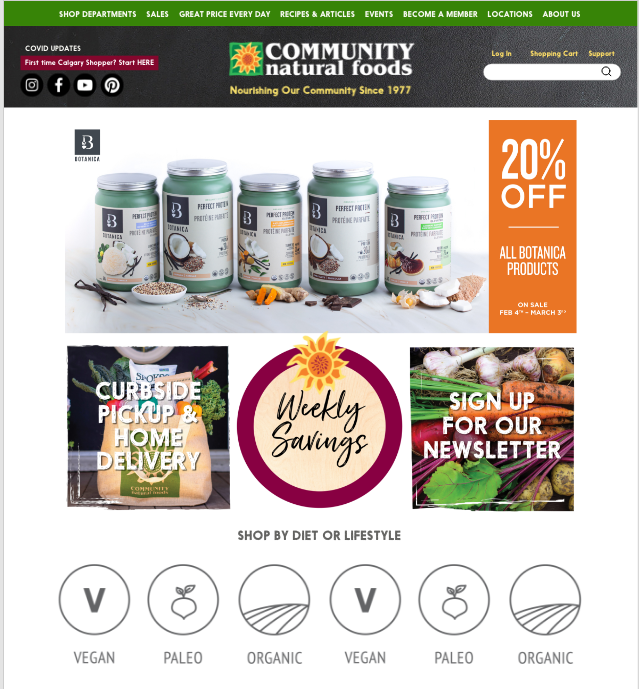
Community Natural Foods was acquired and required to migrate from their current online platforms to a new one. It involved an e-commerce site (7,000+ products, curbside pickup, and home delivery across four Calgary stores) and a content site (recipes, articles, events). The risk was significant. Any friction introduced between those two experiences (shopping & learning), onboarding and search could break the shopping habits customers had built over years. And we had one shot to get it right. Three problems defined the brief: • Keeping users oriented across two sites without losing them at the handoff point • Maintaining the dietary and lifestyle filter experience that CNF customers depended on. • Preserving and ideally improving the search functionality that data showed users relied on more than navigation.
The Approach
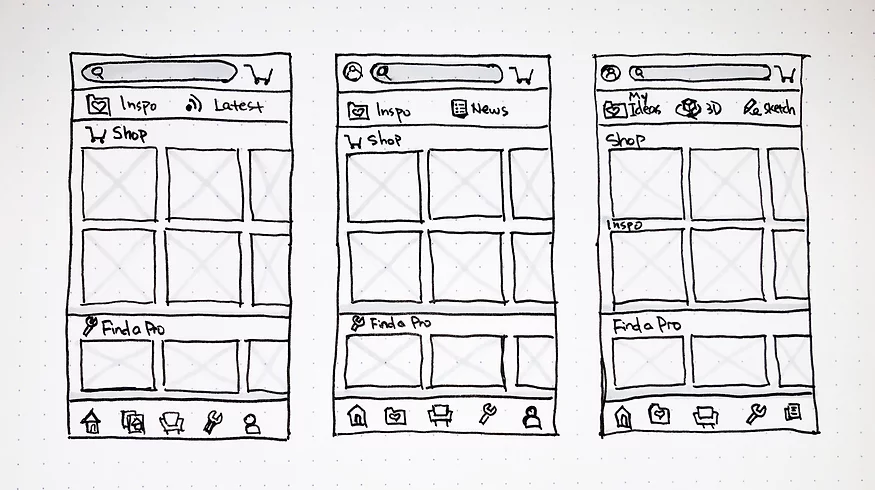
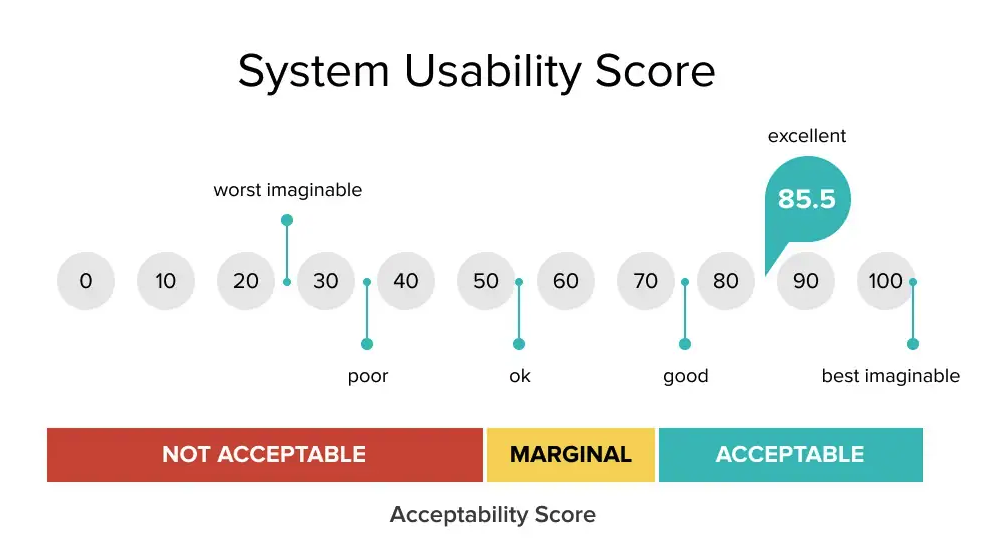
DISCOVERY SESSIONS Before any design work, I ran discovery sessions with store staff, customer service, and our team stakeholders. We mapped the journey people actually took across both sites, marked where it broke down, and agreed on what had to survive the migration: the diet and lifestyle filters, search, and the habits customers had already built. Those sessions set the order of everything that followed. DESIGN DECISIONS The biggest design challenge was preventing users from getting disoriented between two sites. My original proposal was a modal on the shopping site offering three clear paths: Delivery, Pickup, or Learn (linking to the content site). When development budget didn't support that build, I shifted my focus to the onboarding flow, which turned out to be the higher-impact intervention anyway. TASK FLOWS I designed two primary task flows to stress-test the new experience before moving to visual design: • Start Shopping: mapping the fastest path from landing to first product in cart • Shopping for Dietary Preferences: a task flow unique to CNF's business model. REDESIGNED ONBOARDING FLOW The previous experience required users to choose a fulfilment method (delivery or pickup), enter an address, and sign in before they could browse any products. I redesigned the flow so products were immediately visible, and the fulfilment prompt was deferred until a customer added something to their cart. This single change addressed the most common drop-off point in the funnel. Users could explore the catalogue, shop by diet or lifestyle, and build intent before being asked for any commitment. STAKEHOLDER & USER INTERVIEWS One-on-one interviews with customers, employees, and customer service staff surfaced a consistent theme that informed product priorities. USABILITY TESTING The existing site had never been formally tested. I ran a System Usability Scale (SUS) survey across the platform and the results helped me focus redesign effort on flow and find-ability rather than fundamental usability repair. HEAT MAPPING A heat mapping series on the homepage confirmed that users were leaning on search far more than the navigation bar. These findings directly shaped the wireframe priorities for the new shopping site. DATA ANALYSIS A deep dive into Google Analytics, PowerBI reports, platform data, and input from our SEO and digital agency partners revealed two critical findings: • Most users were on mobile, a fact that hadn't been centred in the previous design decisions. • A significant volume of recipe pages weren't appearing in Google search results due to a template error and missing image alt text, a quick win with meaningful SEO impact.
Process & Artifacts
Key Results
- 27%increase in traffic
- 30%increase in engagement
- 2%increase in conversion
- 22%decrease in bounce rate
Customer care call volume dropped after launch — a signal that the redesigned onboarding flow eliminated the friction that had been driving support requests.
EQera: AI with Emotional Intelligence
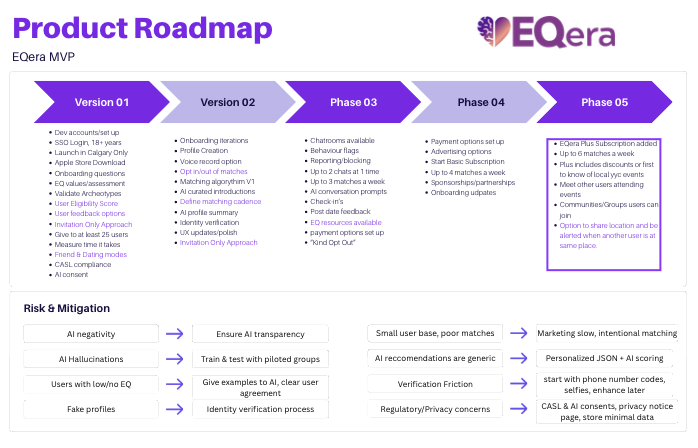
Using AI accelerated business development to go from an idea to MVP launch in 3 months.
The Challenge
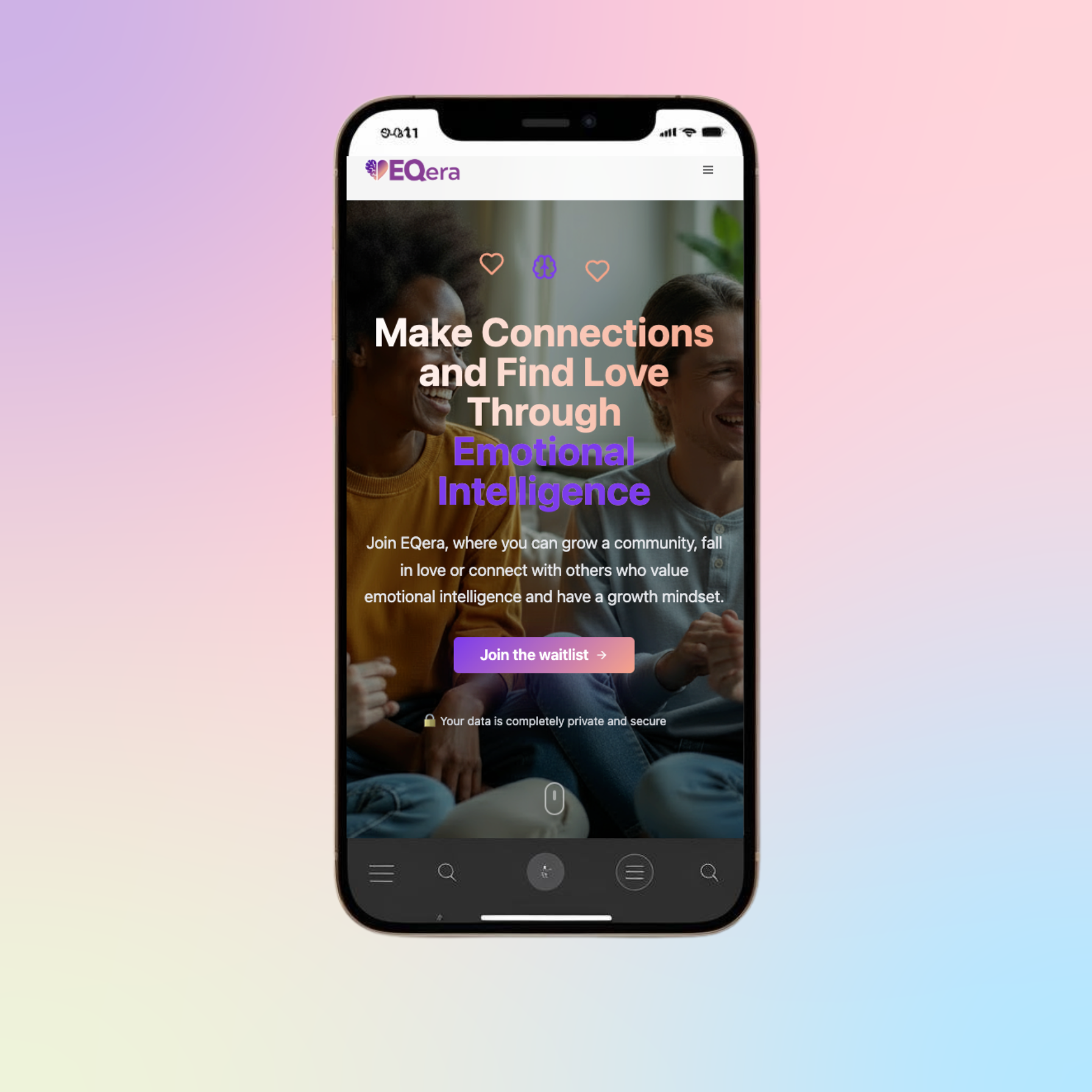
Right now there's a gap between what AI can do technically and what humans need emotionally. I'm training and using AI to help humans better understand themselves and other humans, by assessing one's emotional intelligence, as well as their strengths and weaknesses. I take a human-first approach to creating meaningful connections and use technology to help do it vs creating technology to be more human-like.
The Approach
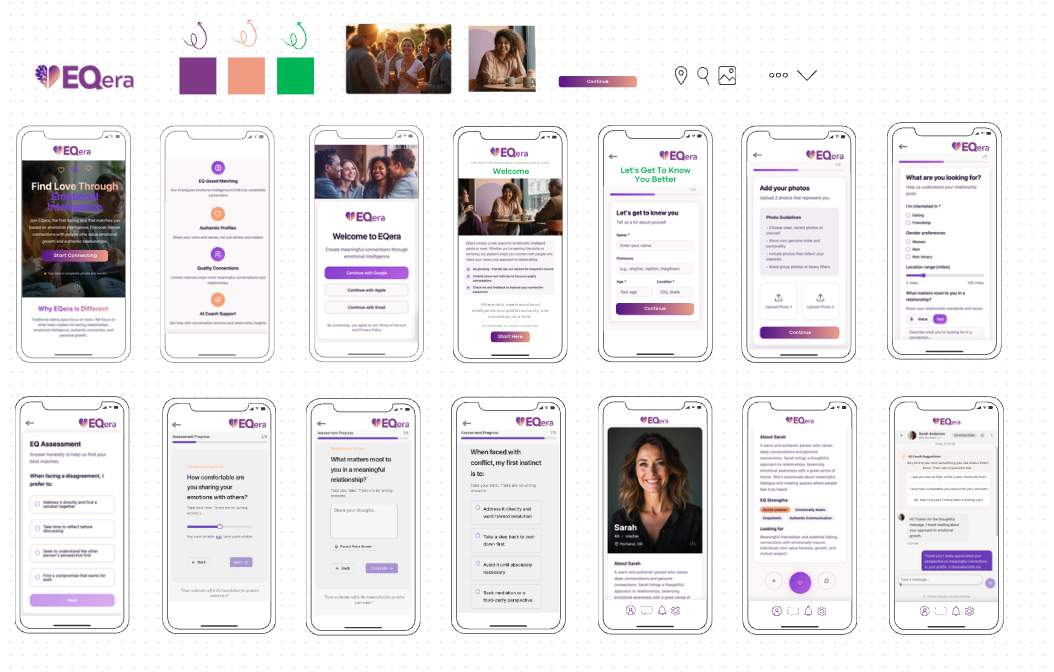
As founder and digital lead, I'm building EQera from the ground up with emotional intelligence as the core product principle. This means integrating insights from psychology, neuroscience, and design thinking into every aspect of the AI's interaction model.
Process & Artifacts
Key Results
- Developed proprietary emotional intelligence framework
- Went from discovery to launch of MVP within 3 months
- Built prototype demonstrating empathetic AI responses
- Published thought leadership on human-centred AI design